

Table of Contents
Introduction of Blue PCB and Green PCB
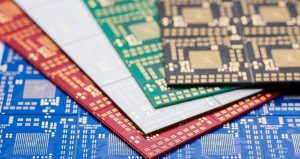
The color of the solder mask is the most noticeable difference between a blue and a green PCB. Blue (008C4A) and green (4990E2) are two solder mask colors, each with a unique communication language.
Blue PCB is becoming increasingly popular in a variety of applications, due to their aesthetic appeal. Occasionally, they are more expensive than typical PCBs (green PCBs).
Green PCB is more traditional, widely available, and usually cheaper. The green hue allows production and maintenance people to stare at the PCB board operation for extended periods without becoming exhausted.
You may wonder about the performance, cost and application of two types of PCB, and whether to choose blue or green circuit boards.
Therefore, this article will compare the blue circuit boards and green circuit boards, from their definition to their properties and quality, electrical performance, cost and application. After reading this article, you’ll understand how to choose PCB color.
Beyond Aesthetics:
Functionalities of Different PCB Colors
With their particular color, blue printed circuit boards frequently indicate an emphasis on high-performance applications. Blue can represent precision, stability, and innovation, making it an appropriate color for complex electrical systems that require top-tier performance and dependability.
However, green circuit boards, the more conventional option, represent adaptability and cost-effectiveness. Green polychlorinated biphenyls (PCBs) are common in consumer electronics, highlighting their importance in everyday gadgets where a balance between performance and cost is crucial.
The significance of PCB colors doesn’t end there. Component placement, signal routing, and layers’ functionalities are often color-coded, streamlining the design, and troubleshooting processes for engineers and technicians.
Why Choose Blue Circuit Boards
Blue circuit boards, also referred to as blue solder mask PCBs, have earned notoriety not only for their striking appearance but also for their excellent performance features.

Composition and Manufacturing Process
Typically, blue circuit boards are made from:
- Blue Substrate (FR-4)
- Copper
- Solder Mask (blue hue)
- Silkscreen
The blue solder mask is then placed to prevent the solder from spreading to unwanted places during assembly. This mask is composed of a photosensitive polymer that is cured by ultraviolet (UV) light, ensuring accurate coverage and stickiness. Silk-screening is the final phase, which adds component labels, reference designators, and other identifying information to the circuit board.
Applications and Advantages
Blue circuit boards are one of the most popular PCB colors, second only to green circuit boards. Blue PCBs are popular because they are visually appealing and contrast well with silk screens and alignments, ensuring track visibility and information readability.
The exceptional thermal stability of blue PCBs makes them an excellent choice for high-performance systems that generate significant heat, such as:
- Medical electronics
- Aerospace and defense electronics
- Industrial automation equipment
- Power Electronics
- Digital clock and signage
- Musical instruments, synthesizers, and amplifiers
- Televisions and stereos
- Computers and printers
- RC drones, robots, and other vehicles

The blue coloration of these boards is not only visually appealing but also serves practical purposes. It aids in distinguishing different circuit sections and facilitating troubleshooting and maintenance. In situations where complex systems require intricate connections and the potential for errors is high, color-coded differentiation can be an asset.
Blue circuit boards often cater to applications where precision and accuracy are critical. Their superior electrical insulation properties and resistance to environmental stressors contribute to reliable operation in demanding conditions.
Why Choose Green Circuit Boards
Green circuit boards, often referred to as green solder mask PCBs, have long been a staple in the electronics industry. Let’s delve into the composition, manufacturing process, applications, and benefits of green circuit boards, shedding light on their enduring popularity.

Composition and Manufacturing Process
Green circuit boards share similarities with their blue counterparts in terms of composition and manufacturing process.
- Green Substrate
- Copper
- Solder Mask (green hue)
- Silkscreen
They are typically constructed using a fiberglass-reinforced epoxy laminate, providing a strong and durable foundation. The green color, characteristic of these boards, is achieved through the application of a green solder mask during the manufacturing process.
The fabrication process begins with the layering of fiberglass cloth impregnated with epoxy resin. This layered structure is subjected to heat and pressure, resulting in a rigid and robust substrate. Copper layers are added to the board’s surface, and intricate copper traces are etched using photolithography techniques. The green solder mask, composed of photosensitive polymers, is then applied to protect the copper traces from environmental factors and prevent solder bridges during assembly.
Finally, a silkscreen layer is added to label components and provide other essential information.
Applications and Benefits
Thanks to their balance of performance, cost-effectiveness, and reliability, green circuit boards find their application across a wide spectrum of industries:
- Aerospace and Defense
- Communications & Networking
- Consumer Electronics
- Education and Universities
- Engineering
- Enterprise and Cloud
- Health Tech
- IOT
- Renewable Energy
One of the key benefits of green circuit boards is their cost-effectiveness. The manufacturing processes and materials involved in producing green PCBs are often more readily available and budget-friendly, making them a suitable option for projects with strict cost constraints.
Furthermore, green PCBs offer excellent electrical insulation and stability, making them well-suited for applications that do not demand the specialized attributes of other colors. Their versatility extends to a variety of industries, including telecommunications, consumer electronics, and industrial automation.
A Comparative Analysis: Blue PCB vs Green PCB
Pros | Cons | Cost | |
| Blue PCB | Looks high-grade. | The hardness of blue oil is not enough, it is easy to be scratched, and PCB manufacturers will increase the number of defective products. | higher than conventional PCBs |
Great visual inspection. | |||
Difficult to plug the holes with blue oil, and it is easy to flow out after plugging the holes. | |||
Good aesthetics and contrast with the silkscreen and traces. | |||
Easy to change color after SMT, and the influence of flux is big. | |||
More resistant to moisture and chemicals | |||
Green PCB | More environmentally friendly. | Much harder to cut | cheaper |
Easy to plug the holes. | |||
Very common color | |||
Easy to check soldering points and circuit connections. |
Various dimensions of comparison, shedding light on the strengths, limitations, and trade-offs associated with each PCB variant. In the dynamic realm of printed circuit boards (PCBs), conducting a comprehensive comparative analysis between blue and green circuit boards is essential to make informed decisions aligned with your project’s unique requirements.
The electrical performance of PCBs is a critical factor influencing their suitability for diverse applications. Let’s explore how blue and green circuit boards fare in terms of signal integrity, impedance control, and high-frequency performance.
Criteria | Blue Circuit Boards | Green Circuit Boards |
Signal Integrity | Exceptional impedance control, minimal signal loss | Good signal integrity for a broad range of uses |
Impedance Characteristics | Precise control for high-frequency applications | Versatile impedance characteristics for general purposes |
High-Frequency Performance | Well-suited for advanced communication systems | Reliable performance for standard electronics |
Efficient heat dissipation is paramount to prevent component damage and ensure longevity. Here’s a closer look at how blue and green circuit boards handle thermal management.
Criteria | Blue Circuit Boards | Green Circuit Boards |
Thermal Stability | Excellent at diffusing and conducting heat | Balanced heat distribution for general needs |
Heat Dissipation | Well-suited for high-power applications | Effective cooling measures for various devices |
As environmental awareness grows, evaluating the ecological impact of PCB choices becomes crucial. Let’s assess the environmental attributes of blue and green circuit boards.
Criteria | Blue Circuit Boards | Green Circuit Boards |
Material Composition | Involves specialized materials and pigments | Utilizes eco-friendly materials and processes |
Sustainability | Potential for higher environmental footprint | Reduced environmental impact and alignment with sustainability initiatives |
Balancing performance with cost is a fundamental aspect of PCB selection. Analyzing the cost-effectiveness and manufacturing efficiency of blue and green circuit boards provides valuable insights.
Criteria | Blue Circuit Boards | Green Circuit Boards |
Manufacturing Cost | Generally higher due to advanced processes | More cost-effective with streamlined methods |
Budget Consideration | Warranted for precision-demanding applications | Attractive for projects with budget constraints |
Manufacturing Efficiency | May involve intricate steps and longer lead times | Generally faster and more straightforward production |
Conclusion
The comprehensive comparative analysis underscores the unique attributes of blue and green circuit boards. Each PCB variant presents distinct advantages, catering to diverse application needs. The final choice depends on the specific project requirements, performance expectations, and budget considerations.


CONTACT US


 English
  Italian
  Hungarian