

Table of Contents
Have you ever experienced the experience: The electronic equipment or circuit was accidentally exposed to water, and while it functioned normally after drying, it failed unexpectedly, revealing that the components and traces inside were heavily corroded? This is a typical PCB failure caused by the invisible killer, PCB corrosion.
Printed Circuit Board (PCB) corrosion refers to the deterioration of conductive elements such as solder joints, copper traces, or component leads on a printed circuit board due to electromagnetic or chemical reactions with environmental factors.
In this article, ELE PCB will introduce the causes, types, and damages of circuit board corrosion and give suggestions to prevent and clean corrosion on PCBs.
What Causes PCB Corrosion?
While many factors could lead to PCB corrosion, the common causes of circuit board corrosion are:
- Environment Effect: PCB corrosion can be accelerated by wet environments, high humidity, salt spray, and corrosive gases such as sulphides and water-soluble salts in the dust.
- Corrosion-prone Materials: When the material used for PCB is a corrosion-prone metal such as copper or tin, it is more susceptible to corrosion than precious metals such as gold or silver.
- Capacitor and Battery Leakage: Corrosive substances like acidic or alkaline electrolytes from leaking batteries and capacitors easily corrode nearby traces and components in a printed circuit board, risking the functionality of the board.
- Flux Residue: Flux residues from soldering have been a major cause of corrosion. Corrosive or acidic flux, realized from soldering, can easily eat away at metal traces as time progresses, especially if not cleaned properly.
- Daily Friction: During use, electronic products generate heat, vibration, and friction, which can damage the protective layer on the surface of the PCB. This exposes the metal, which is prone to corrosion.
Types of PCB Corrosion
Corrosion of a variety of types can be identified by examining the performance of circuit boards.
Galvanic Corrosion
Galvanic PCB corrosion occurs when dissimilar metals, such as gold and copper, come into contact in the presence of an electrolyte like moisture. To identify galvanic corrosion visually, look for erosion or severe pitting in one metal.

Uniform/Atmospheric Corrosion
Uniform/atmospheric corrosion occurs when boards are exposed to oxygen and moisture, causing metals like copper to oxidize. Identifying uniform/atmospheric corrosion is easy, all you need to look out for is blue or green discoloration, or the presence of white powdery deposits on traces.

Pitting Corrosion
Pitting corrosion on printed circuit boards is caused by localized chemical reactions that create tiny cavities or cracks in copper traces. Left untreated, such affects the functionality of the entire board.
To identify signs of pitting corrosion, look for holes or visible pits on the surface of your PCBs, often located or hidden under surface finishes. Also, you may have to use electrical testing to see if there are unexpected circuit discontinuities.

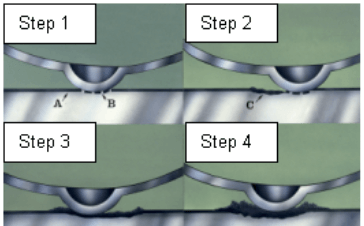
Fretting Corrosion
Fretting corrosion on PCBs occurs due to mechanical wear, especially when removing the protective oxide layers of a circuit board.
To identify signs of fretting corrosion, look for black or brown debris near the moving parts of a board, especially the connectors. Additionally, take note of intermittent electrical disruptions during device functioning.
Crevice Corrosion
Another common type of PCB corrosion is crevice corrosion, caused due to the accumulation of contaminants such as flux or cleaning materials in several tight spaces under the PCB components.
To identify it, look for corrosion spots in narrow gaps, especially beneath solder joints, or peeling of protective coatings.

Inter-Granular Corrosion
This type of PCB corrosion occurs when impurity-containing metals are attacked chemically along their grain boundaries. To easily identify intergranular PCB corrosion, look for signs of weakening or surface flaking of metal traces, mostly detectable via the use of microscopic analysis.

Damage of PCB Corrosion
PCB corrosion largely destroys the copper traces of printed circuit boards, compromising their durability and performance.
- Decrease in electrical performance: Corrosion causes an increase in circuit resistance, lower insulation performance, short circuits, circuit breaking, leakage, and other problems, all of which impede the normal operation of electronic products.
- Reduced reliability: Rust will reduce the mechanical strength of the PCB, resulting in loose solder joints, line breakage, and other issues that will diminish the product’s service life.
- Safety risks: In some cases with stringent safety standards, such as aircraft and medical equipment, PCB corrosion can result in significant mishaps.
How to Avoid PCB Corrosion
Although corrosion is a common issue, preventive actions can successfully eliminate it. Take preventative actions based on PCB corrosion factors, which include the environment, materials, manufacturing and assembly aspects. The common PCB corrosion protection methods are described below:
| Corrosion Protection Method | Stage | Description |
| Follow Controlled Lamination Procedures | Manufacturing | Use desiccant materials; wrokers must wear protective clothing |
| Use Meshed Copper Planes | Manufacturing | Prevent moisture movement between laminate layers |
| Apply Surface Finishes | Manufacturing | Best method to protect PCBs between manufacturing and assembly; ENIG is the most popular but not the only option |
| Baking | Assembly | Bake the PCB after assembly to remove moisture |
| Use Protective Coatings | Assembly | Use protective coatings regulated by IPC (primarily in IPC-CC-830B and IPC-A-610) |
| Thermal Secondary Molding | Assembly | Thermal secondary molding or encapsulation (suitable for high-temperature environments) |
| Micro-encapsulation | Assembly | Encapsulate corrosion-sensitive components or board elements |
| Storage in ESD Bags | Post-Assembly | PCBs should always be stored in ESD bags for electromagnetic isolation and moisture preventation |
| Install PCBs in Enclosures | Post-Assembly | Mounting PCBs in enclosures (should be well-ventilated to prevent moisture buildup) |
How to Clean PCB Corrosion
If corrosion has already occurred, how can we clean corrosion off a circuit board? Next, ELE PCB will provide you with a step-by-step guide to cleaning corroded circuit boards. Firstly, you need to prepare the necessary cleaning tools:
Cleaning PCB Corrosion Tools
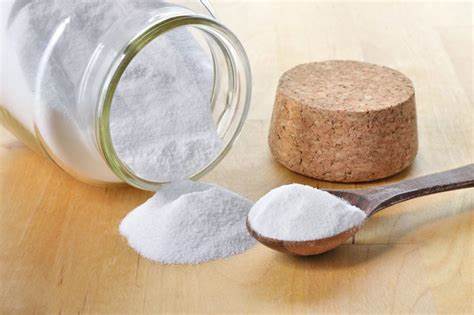
- Baking Soda: Baking soda contains sodium bicarbonate, which breaks dirt down into small particles. Its gentle abrasive properties eliminate corrosion without causing any damage.
- Isopropyl Alcohol: Isopropyl alcohol or alcohol can be used to remove all kinds of dirt, debris, flux and rust on circuit boards. The isopropyl alcohol used for this purpose has a concentration of 90% or higher and should be used with care.
- Deionized or Distilled Water: When cleaning the board with water, make sure it is free of contaminants. Use deionized or distilled water to avoid damage to the PCB.
- Compressed Air: Compressed air is commonly used in the electronics cleaning filed, aiming to remove dust from the interior of electronic devices and machinery.
- Soft Brush: To remove the rust or dust on PCBs.
- Oven, soft microfiber cloth



PCB Corrosion Repair Steps
Now please follow the steps to do circuit board corrosion repair:
Step 1
To verify the location and degree of damage, test the PCB first. Before cleaning, make sure the battery is taken out and the PCB is not attached to a power source. Keep track of the PCB’s layout and configuration for reassembly after cleaning, and safeguard any delicate components.
Step 2
To soften the rust and dust, dismantle the PCB and use a light cleaning solution, such as baking soda or isopropyl alcohol, on it with a soft-bristled brush. To minimize damage, better use special circuit board corrosion cleaners. Keep in mind that chemical cleaners should be applied to the entire PCB to prevent corrosion in the future.
Step 3
Use distilled or deionized water to clean after further removing the stains with a brush. Avoid scrubbing or scraping, which may cause PCB damage.
Step 4
After washing, dry the board with a soft microfiber cloth and use an oven or other drying tool. To ensure there is no moisture or other chemical residue, you should test the PCB.
Step 5
Inspect for loose or damaged components and, if necessary, replace or reorganize them. Apply a protective coating or corrosion inhibitor once all the procedures have been finished, and then perform routine maintenance and inspections.
Conclusion
Knowing the origins, kinds, and remedies of PCB corrosion is crucial because it is an unseen source of electronic device failures. You can greatly increase the boards’ service life and equipment dependability by selecting corrosion-resistant materials, streamlining production procedures, and performing routine maintenance. ELE PCB, a skilled PCB manufacturer, is dedicated to offering premium corrosion-resistant PCBs and customized solutions. We use high-quality paint and advanced surface treatment technology and all products have strict quality inspections to minimize the corrosion rate. Contact ELE PCB now to get support!
FAQs
A1: Look for signs like green/blue discoloration, white powdery deposits, black/brown debris near connectors, or visible pits on traces. Test electrical continuity with a multimeter to check for unexpected resistance or open circuits.
A2: Yes! Use a soft brush with baking soda or 90%+ isopropyl alcohol to gently scrub corroded areas. Rinse with distilled water, dry thoroughly, and inspect for residual damage. Avoid harsh chemicals or abrasive tools.
A3: Use corrosion-resistant metals like gold or silver for critical components. Apply conformal coatings (e.g., acrylic, silicone) to protect traces and avoid corrosive flux during soldering.


CONTACT US



 English
 Italian
 Hungarian