

Table of Contents
What is an Attenuator?
Mechanisms of Signal Control in Attenuators
Types of Attenuators
Passive Attenuators
Active Attenuators
Functionality and Purpose of Attenuators

Amplifier vs. Attenuator: Core Differences
| Parameter | Amplifier | Attenuator |
| Primary Function | Boosts signal power (gain >0 dB) | Reduces signal power (loss >0 dB) |
| Energy Source | Requires external power (active) | No external power (passive) |
| Signal Path | Adds energy to the signal | Dissipates energy as heat |
| Distortion | Introduces noise & nonlinearity (THD↑) | Near-zero distortion (THD <0.01%) |
| Frequency Limit | Limited by gain-bandwidth product | DC to 100+ GHz (theoretically unbounded) |
Practical Applications
When to Use Amplifier
- Boosting sensor signals (e.g., IoT devices).
- Compensating channel loss (e.g., long cables).
- Driving high-power loads (e.g., antenna feeds).
When to Use Attenuator
- Protecting receivers from overload (e.g., 5G base stations).
- Precision level setting (e.g., test equipment calibration).
- Improving impedance matching (e.g., reducing reflections).
Factors Affecting Attenuator Performance
Several factors influence the performance of attenuators in electronic circuits.
One significant factor is the frequency range over which the attenuator operates. It is crucial to opt for suitable frequency characteristic attenuators that can maintain stable performance to ensure precise signal control throughout this range.
Additionally, the performance of an attenuator is determined by its attenuation accuracy and linearity. Accurately, the attenuator should decrease the signal intensity by the specified value without significant deviations or nonlinearities. For instance, if attenuation inaccuracy is poor or nonlinearity exists, this could lead to signal distortion or inaccurate data, thus having serious implications for how well other parts function together in an electronic system. Therefore, choosing attenuators with high accuracy as well as those that are linear enough becomes very important for an AC.
Attenuator Installation and Setup Tips
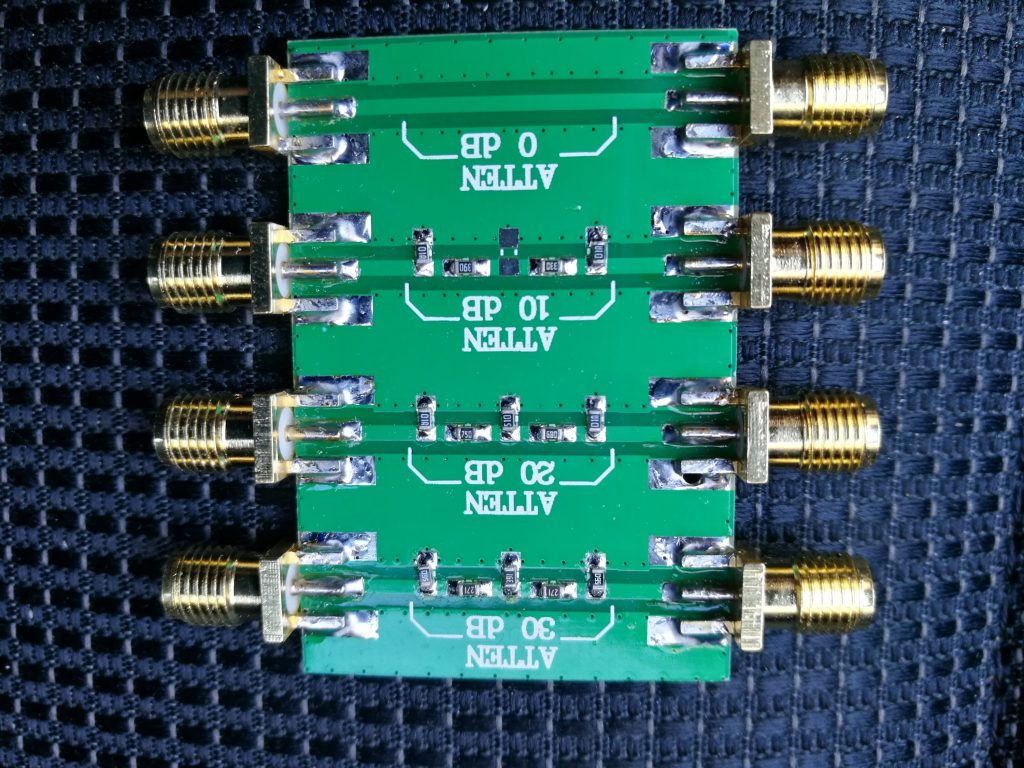
Common Attenuator Issues and Solutions
Attenuators can encounter common issues that affect their performance.
Signal Waveform Distortion
- Selecting attenuators with THD <0.1% (e.g., thin-film types)
- Ensuring system impedance matching (VSWR <1.5:1)
- Implementing signal conditioning like pre-emphasis/equalization circuits for digital signals
Impedance Mismatch-induced Reflections
Conclusion
FAQs about Attenuators
Q1: Where are attenuators used?
Q2: Why are attenuators necessary?
Q3: How do attenuators work?
Q4: What are the types of attenuators available?
- Fixed Attenuators: Provide a set, unchanging amount of attenuation (e.g., 3dB, 10dB).
- Variable Attenuators: Allow manual or electronic adjustment of the attenuation level (e.g., rotary knob, voltage control).
- Digital/Programmable Attenuators: Use digital control signals (e.g., via SPI, I2C) to set precise attenuation levels, often integrated into ICs.


CONTACT US


 English
  Italian
  Hungarian