An Innovative Multilayer PCBA Manufacturer

Custom PCBA Manufacturing Service!

Banner

Can You Use AC in a PCB -From Principles, Applications to Challenges

Table of Contents

A printed circuit board is the brain of any electronic device and such boards offer a stable platform in which you can connect components and use them to drive the functions of devices. PCB is best suited for DC current, but the major question is, “Can you use AC in a PCB“? To answer this question, let’s delve into the basics of PCB and see if AC can be utilized safely in these printed boards.

While we explain the process, consider taking a look at the ELE contact page if you are planning to get your circuit boards made. Check out ELEPCB‘s manufacture and quality control! 

AC and DC in PCB Technology

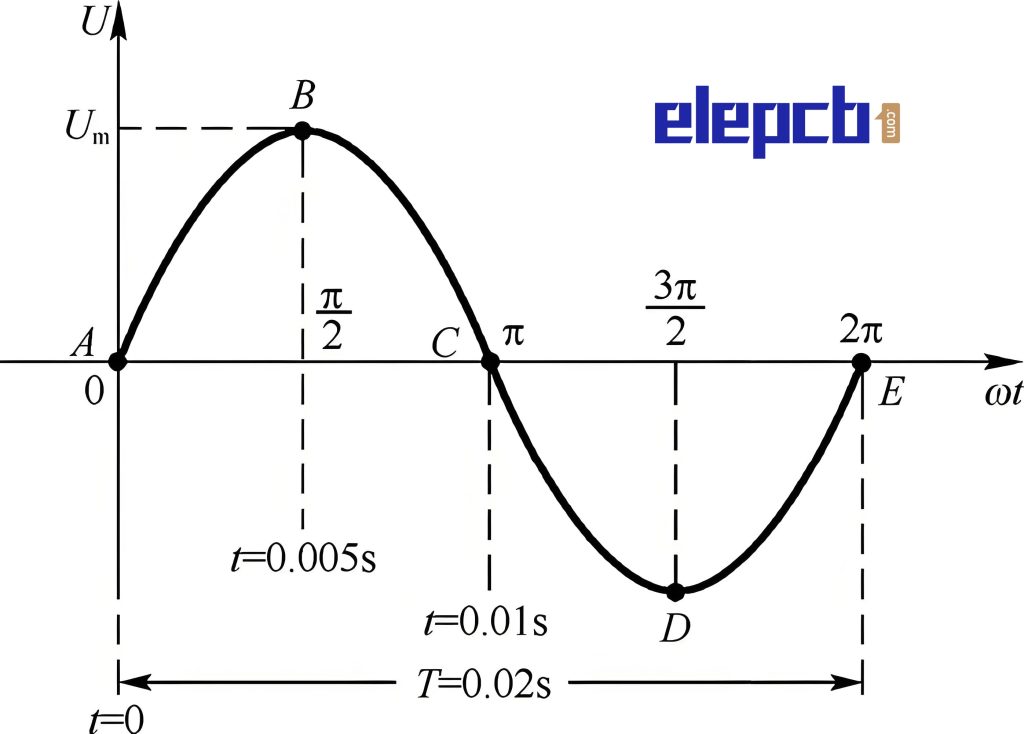
There are two types of current technologies which are known as alternating current and direct current. While alternating current moves in a sinusoidal wave within the circuit, it is perfect for applications such as homes and industrial use because it can travel long distances. DC current is a type that flows in one direction, allowing it to provide constant voltage. This makes it suitable for small electronic devices that also include PCB boards.
 
Direct current is the preferred choice for most PCB applications because of a number of advantages. DC current provides a stable voltage and unidirectional current, allowing it to align with applications that need stable voltage in order to operate effectively. The use of DC current allows for lower signal interference and heating, unlike AC current. The devices which are powered by DC circuits can also be optimized leading towards lower energy consumption, making it suitable for smart wearables and portable electronics.
 
DC is common among electronic devices, but there are instances where AC current is also needed. Such devices include air conditioners, home electronics, and industrial machines. In these devices, the PCB includes components that can convert AC to DC. The components are designed to handle challenges that come with AC current.
To conclude, ELEPCB made a table for better explanation.

Table 1 Basic Explain of AC and DC

TypeSpecificitiesApplication Scenarios
ACTravels in sine wave through circuits, hence can be used in long distances; thus, it was perfect for use both at home and in industries.It moves as a sine wave in a circuit, which is good for long distance transmission, working both domestic and industrially.
DCUnidirectional flow of current:
provides the same voltage, low interference in signals and heat generation, optimizes equipment to reduce energy consumption

Small electronics appliances including PCBs, smart wearables, portable electronics, etc.

Converting AC (Alternating Current)
to DC (Direct Current)

Why Do We Need to Convert AC to DC?

AC current is made to withstand long distances and is efficient, but it can introduce fluctuations leading to incompatibility. Due to this, it is important to convert AC to DC so that the devices can behave exactly as described.

How Does it Work?

Printed circuit boards are made in such a way that can convert AC to DC, allowing the boards to provide constant electricity for powering up the essential controllers and MCUs in circuits
Waveform diagram of sinusoidal AC circuit
A typical bridge rectifier circuit diagram
  • First, it requires a rectifier circuit. In this case, a full-wave rectifier would rectify the AC input-a diode bridge rectifier.For conducting the diodes in the bridge during the two halves of the AC cycle to ensure that current flows only in one direction, it is still pulsating DC in nature. 
  • Next comes the smoothing filter. Normally, a large-value capacitor serving as a charge reservoir is used. This will tend to charge at the peaks of the pulsating DC and discharge at the troughs. The end result of this action will be that the ripple factor will be reduced with this type of capacitor. In some cases, an inductor can also be added along with a capacitor for better filtering. 
  • Finally, in order to feed sensitive electronic equipment with a stable DC output voltage, a voltage regulator may also be employed.

Quick Scan of Types Of AC

AC Types

The Components Work Side By Side to Convert AC to DC:

So, the question is, which of the following components converts AC to DC? A various number of components work side by side to convert AC to DC.
Rectifiers
transformers
Regulators
    1. Rectifiers:
  • Rectifiers are bridge circuits that are made up of diodes that allow the movement of current in one direction only. The diodes are arranged in such a way that they block the sinusoidal nature, providing a lean DC current output.
    2. Transformers:
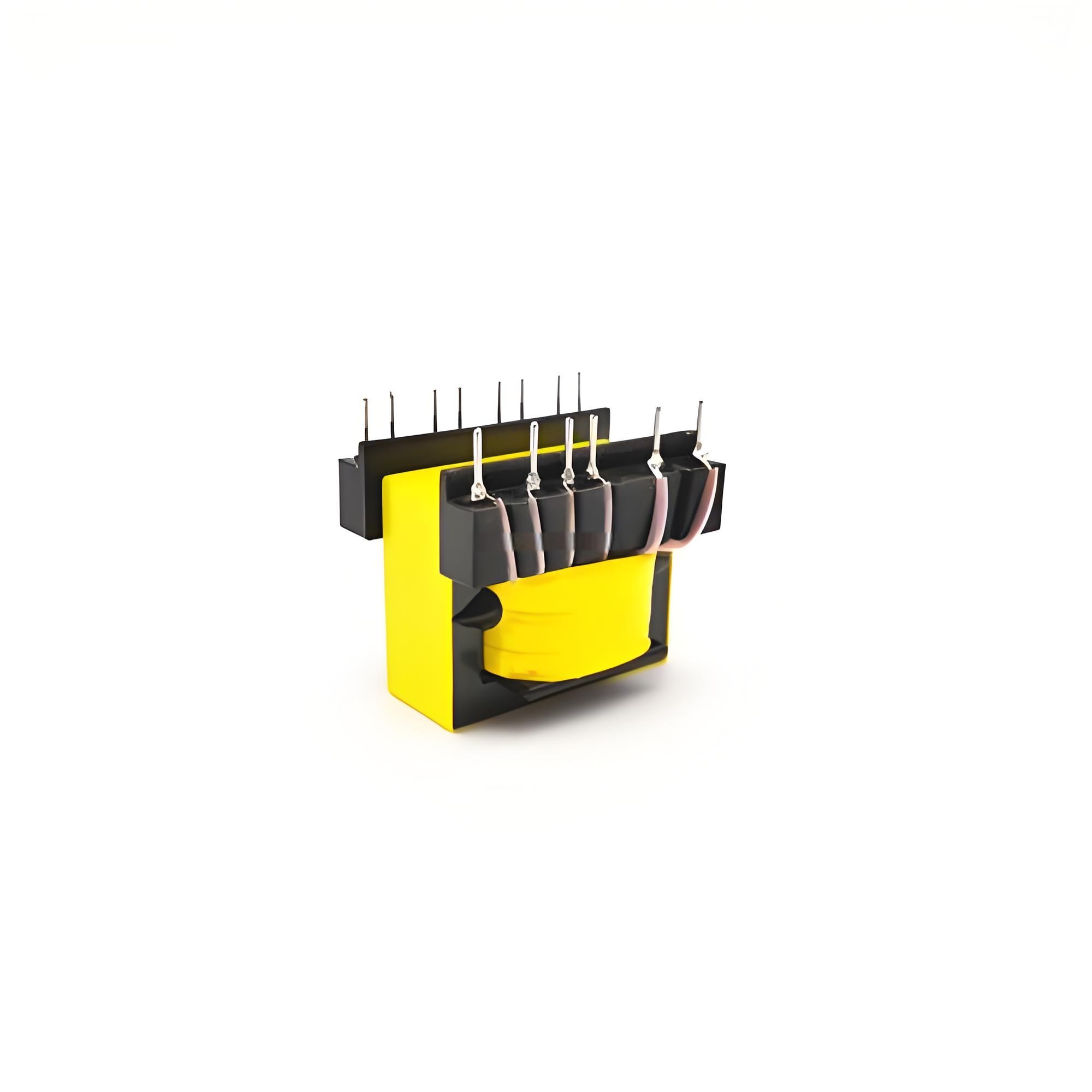
  • The next crucial component in covering AC to DC is transformers. Transformers are used to bring AC voltage to a suitable range before passing them through rectifiers. Transformers either step down or step up voltage, depending on the device’s requirements.
    3. Regulators:
  • Once the AC is converted into DC, voltage regulators are used to stabilize the output voltage to a consistent level, mitigating the fluctuations and preventing damage to sensitive components in circuit boards.

Applications of AC in PCBs

AC current is widely used in PCBs to handle the operation of the systems. Here are some examples.
  • One of the widely used examples is Air conditioners. PCBs in ACs are used to control a variety of functions, sensors, and control panels. The PCB circuit in Air conditioners uses specific components to distribute AC power including transformers and rectifiers. While alternating current is used to drive the compressor, fan, and other motor-driven components, DC is used to control the PCB circuitry. In circuit board in air conditioner, AC voltage is converted using the rectifiers, and the output DC is used to handle displays, microcontrollers, and modules.
  • Talking about other applications, AC is used in high-power applications such as inverters. The PCB of the inverter converts AC to DC and is attached to solar panels and batteries to power up the homes. Inverters use specialized PCB boards that allow the smooth conversion of AC to DC and vice-versa, providing optimized energy solutions.
  • Another use of AC PCBs is in motor operating systems. The motors used in industrial applications such as washing machines, and coolers require a regular AC supply to operate effectively. The PCB of such systems is designed in such a way that they can directly handle AC current using robust components.

What are the Challenges of
Using AC in PCB Boards?

The use of alternating current in PCB comes with significant challenges that if not catered through can lead to component damage and mishaps.

Thermal Buildup

One of the significant issues with AC current is managing the complex nature of alternating current. Due to the change of direction, AC can induce heat and noise in the system. Where DC has a flat line, AC current oscillating nature leads to more power consumption. This can cause components to heat up. To prevent that, proper heat management components like heat sinks and thermal vias are used. Moreover, a strategically designed layout technique is also used to prevent further heat buildup.

Electromagnetic Interference

The nature of alternating current induces electromagnetic interference that can interfere with signals. The PCBs that use both AC and DC lines can have erratic behavior and also damage sensitive DC components such as microcontrollers and sensors. This leads to the lower performance of the circuit and lower signal quality.

The design of AC PCBs is important for effectively managing the challenges associated with the alternating current. The designers must select the right components that can resist the nature of AC current, phase shifts, and fluctuations. Apart from selection, the trace routes, placement of components, and spacing are also considered so that the crosstalk can be at a minimum level, leading toward the perfect operation of AC PCBs.

Conclusion

Wrapping up, alternating current holds the capability to be used in printed circuits. But, to do that, it is important to know about the parameters and factors that can handle the alternating nature of AC. While DC is used in circuits such as circuit boards in air conditioners because of its simple nature, AC is also incorporated, but with additional components that make the operation of systems as they are defined.
If you are interested in further designing the PCB and how AC is used along with the DC current, consider taking your queries to ELE. The expert team will give you detailed insights into the design features, along with helping you choose the components that can handle the nature of AC sine waves.

FAQs

Yes, AC can be used in PCB design. However, in order to do that, you will need additional components and design parameters that can manage the EMI, heat dissipation, and stability.
Direct current is preferred because of its flat-line nature, leading to a lower risk of interference, and making power management more optimized. Since DC provides stability, it makes it perfect for applications that need a constant supply of voltage.
For converting Alternating Current to DC, a series of components take the role in this process. The components are
  • Transformers
  • Rectifiers
  • Voltage regulators
  • Capacitors
All these components work side by side to convert AC to direct current, making it suitable for DC-powered components.
AC in PCBs is used for applications that require high power. The applications include inverters, solar MPPTs, washing machines, air conditioners, and three-phase motors.

CONTACT US


We provide technical expertise form prototype through production, increasing speed to market by 20%.

                   Contact us below to start discussing your project with our Technical Experts today.

                   Whether you already have Gerber Files, submit a Quick Quote for free estimate.

Wenxiao He
I am an experienced engineer specialized in the electronics field with valuable sales expertise and a determined mindset. If we can be of use to one another rest assured that there is no other more professional option on the market than myself.
About Benjamin

Benjamin is the general manager of ELE PCB, a leading PCB design and manufacturing company based in China. He has over 10 years of experience in the PCB industry, and has been involved in various projects.

Get a Quote
Recent Posts